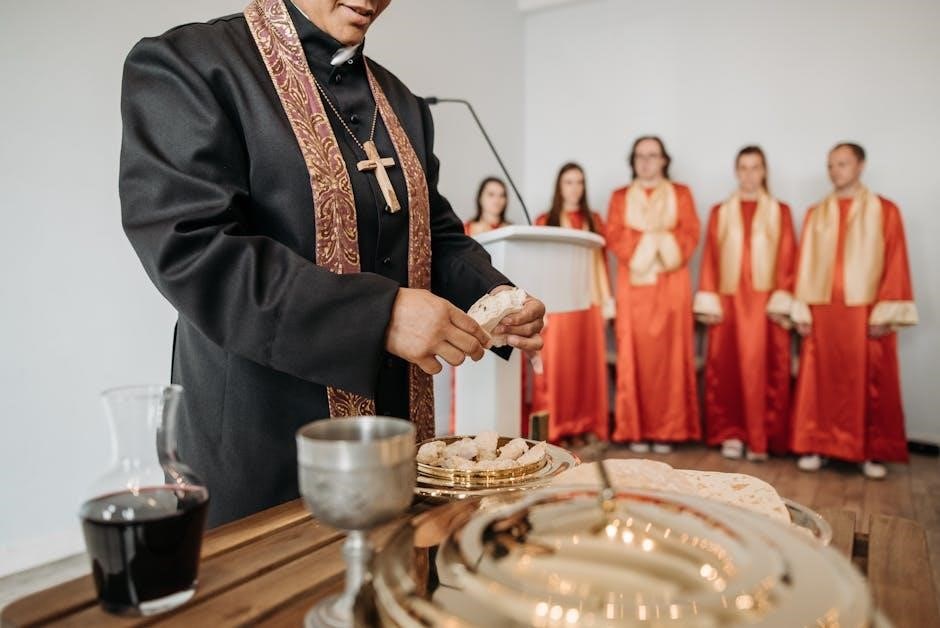
O Sacrament Most Holy: A Comprehensive Guide
O Sacrament Most Holy, a cherished hymn, is readily available as a free PDF download for personal and liturgical use, offering convenient access.
This traditional Catholic hymn, with its beautiful verses and refrain, provides a pathway to Eucharistic devotion, easily accessible through digital sheet music.
Numerous online sources offer this hymn in PDF format, complete with musical notation, facilitating worship and private prayer for all believers.
The PDF versions cater to various instruments, ensuring widespread usability and enhancing communal singing experiences within the Church’s sacred traditions.
Historical Background of the Hymn
O Sacrament Most Holy’s origins are deeply rooted in the evolving landscape of 19th-century Eucharistic piety. While the exact genesis remains somewhat obscured, the hymn emerged from a period of renewed focus on the Real Presence of Christ in the Eucharist.
The text, penned by Reverend F.A. Irvin, first appeared in publications during the late 1800s, quickly gaining traction within Catholic devotional circles. Its initial spread was facilitated by hymnals and prayer books, becoming a staple in parishes across England and beyond.
The hymn’s enduring appeal stems from its simple yet profound expression of adoration for the Blessed Sacrament. The availability of free PDF versions today reflects its continued accessibility and widespread use, allowing for easy distribution and personal devotion. Early publications often lacked detailed musical arrangements, but subsequent editions refined the melody, solidifying its place in liturgical music.
The hymn’s historical context underscores its significance as a product of fervent faith and a testament to the enduring power of Eucharistic devotion.
Origins in Eucharistic Theology
O Sacrament Most Holy is profoundly shaped by centuries of Eucharistic theology, particularly the Catholic understanding of transubstantiation – the belief that the bread and wine truly become the Body and Blood of Christ. The hymn’s lyrics directly reflect this core doctrine, emphasizing adoration of the “divine” and “holy” Sacrament.
The hymn’s focus on the “Victim and our Priest” alludes to the sacrificial nature of the Eucharist, echoing theological interpretations of the Last Supper and Calvary. Its verses invite believers to partake in this sacred feast, receiving “peace and strength” through Christ’s presence.
The widespread availability of the hymn as a free PDF underscores its role in fostering personal devotion rooted in these theological foundations. It serves as a concise yet powerful expression of faith, accessible to individuals seeking a deeper connection with the Eucharist.
The hymn’s enduring popularity demonstrates the continued relevance of traditional Eucharistic beliefs and the desire for intimate worship centered on the Real Presence.
Irvin’s Contribution to the Hymn
While the origins of the hymn’s melody predate him, Reverend Henry Irving (Irvin) significantly shaped O Sacrament Most Holy as we know it today. He penned the English translation of the hymn, originally titled “O Sacremento Mosto e Santissimo,” a Portuguese hymn published in 1750.
Irvin’s translation, completed in the 19th century, beautifully captured the hymn’s devotional spirit and theological depth, making it accessible to English-speaking congregations. His lyrical adaptation is responsible for the hymn’s enduring poetic quality and widespread adoption.
The ease with which the hymn is now available as a free PDF is a testament to the lasting impact of Irvin’s work. His translation ensured the hymn’s continued use in Catholic worship and personal prayer for generations.
Irvin’s contribution wasn’t merely linguistic; he facilitated a deeper connection to the Eucharist for countless individuals through his faithful and evocative rendering of the original text.
Early Publications and Spread
Following Irvin’s translation, O Sacrament Most Holy began appearing in various Catholic hymnals throughout the late 19th and early 20th centuries, steadily gaining popularity within liturgical settings. Early publications often featured simple musical arrangements, facilitating congregational singing.
The hymn’s spread was initially facilitated by printed hymnals, but the advent of digital technology has dramatically increased its accessibility. Today, numerous websites offer the hymn as a free PDF download, complete with sheet music for various instruments.
This digital availability has broadened its reach beyond parish boundaries, allowing individuals worldwide to incorporate it into their personal devotions and worship experiences. The ease of access contributes to its enduring legacy.
The proliferation of PDF versions demonstrates the hymn’s continued relevance and the desire to share this powerful expression of Eucharistic faith with a wider audience.

The Lyrics and Their Meaning
O Sacrament Most Holy’s verses beautifully express adoration for Jesus in the Eucharist, readily available as a free PDF for study.
The hymn’s text invites believers to find peace and strength through the sacred feast, easily accessed through downloadable sheet music.
Detailed Analysis of Each Verse
Each verse of O Sacrament Most Holy unfolds a profound aspect of Eucharistic devotion, beautifully captured in readily available free PDF versions.
The opening verse establishes the holiness of the Sacrament, inviting praise and thanksgiving, easily studied with the downloadable sheet music.
Subsequent verses extend a compassionate invitation to those burdened by sorrow and pain, offering solace and spiritual renewal through the bread from heaven.
The hymn powerfully proclaims Jesus as both Victim and Priest, whose precious blood and body become the sacred feast, a central tenet of faith.
Analyzing each verse within the context of the free PDF reveals a cohesive theological message, emphasizing adoration, sacrifice, and divine sustenance.
The lyrical structure, accessible through the PDF, guides the faithful towards a deeper understanding of the Eucharist’s transformative power.
The Significance of the Refrain
The refrain, “Lord Jesus, we adore thee, Our Victim and our Priest,” serves as the hymn’s emotional and theological core, easily accessible in free PDF sheet music.
Its concise yet powerful declaration encapsulates the essence of Eucharistic worship, repeatedly reinforcing the central act of adoration.
The refrain’s simplicity fosters communal participation, uniting voices in a shared expression of faith, readily facilitated by the downloadable PDF.
Highlighting Jesus’ dual role as both sacrificial Victim and eternal High Priest, it underscores the redemptive power of the Eucharist.
The repetition of the refrain throughout the hymn, clearly visible in the free PDF, creates a meditative rhythm, deepening spiritual engagement.
It acts as a unifying element, binding the verses together and emphasizing the hymn’s central message of reverence and thanksgiving.
Theological Themes Expressed in the Text
O Sacrament Most Holy profoundly expresses core Catholic Eucharistic theology, readily available for study via free PDF versions.
The hymn centers on the Real Presence of Christ in the Eucharist – not merely symbolic, but truly body and blood, as detailed in the downloadable text.
It emphasizes the sacrificial nature of the Mass, echoing Christ’s ultimate sacrifice on the cross, a theme clearly presented in the PDF’s lyrics.
The hymn also highlights the Eucharist as a source of spiritual nourishment and strength, offering solace to those who “labor in sorrow and pain.”
Through the free PDF, one can discern the hymn’s focus on adoration, thanksgiving, and the renewal of faith through communion with Christ.
Ultimately, the text proclaims the Eucharist as a foretaste of heaven, inviting believers into a deeper relationship with the divine.
Symbolism within the Hymn’s Poetry
O Sacrament Most Holy’s verses are rich with symbolism, beautifully preserved in accessible free PDF sheet music downloads.
The “bread from heaven” symbolizes Christ himself, the living bread who gives eternal life, a central image within the downloadable hymn text.
The imagery of “sorrow and pain” represents the burdens of earthly life, contrasted with the peace and strength found in the Eucharist.
Referring to Christ as “Victim and Priest” highlights his dual role in salvation history – both offering and interceding for humanity.
The “sacred feast” symbolizes the communion meal, uniting believers with Christ and with one another, as detailed in the PDF’s lyrics.
Through these symbols, the hymn invites contemplation of the profound mysteries contained within the Eucharistic celebration.

Availability as a PDF Download
O Sacrament Most Holy PDF sheet music is widely available online, offering free access for personal devotion and worship services conveniently.
Sources for Free PDF Sheet Music
Numerous websites provide free PDF sheet music for O Sacrament Most Holy, catering to diverse musical needs. Websites like MuseScore and various Catholic hymn repositories offer downloadable versions with varying arrangements.
Many parish websites also generously share their own arrangements, often including options for piano, guitar, or organ accompaniment. A simple online search using keywords like “O Sacrament Most Holy PDF” yields a wealth of results.
Additionally, dedicated sheet music websites frequently feature traditional hymns in their catalogs, sometimes offering free samples or complete downloads. Remember to verify the source’s reliability and respect any stated usage guidelines before downloading and distributing the music.
Exploring these resources ensures easy access to this beloved hymn for personal practice, choir rehearsals, or enhancing liturgical celebrations.
Copyright and Usage Rights
Determining the copyright status of O Sacrament Most Holy sheet music can be complex, as it’s a traditional hymn with a long history. Many arrangements are in the public domain, allowing free use for personal and liturgical purposes.
However, newer arrangements or those with specific editorial additions may be protected by copyright. When downloading a PDF, always check for any licensing information or usage restrictions provided by the source.
Generally, using the hymn within a church service is permissible, but distributing copies commercially or altering the arrangement without permission may infringe on copyright.
Respecting copyright ensures that composers and arrangers are appropriately credited and compensated for their work, fostering continued musical creativity within the Church.
PDF Versions for Different Instruments
Fortunately, O Sacrament Most Holy PDF sheet music isn’t limited to just piano or organ! A diverse range of instrumental arrangements are readily available online for free download.
Musicians can find versions tailored for guitar, flute, violin, and even vocal ensembles, expanding the hymn’s accessibility and allowing for creative interpretations.
These PDFs often include transposed parts to suit different vocal ranges or instrumental keys, making it easier for various groups to participate in worship.
Websites dedicated to sheet music sharing frequently host these arrangements, offering options for solo performance or larger instrumental ensembles, enriching the hymn’s musical texture.
Optimizing the PDF for Printing
When downloading the O Sacrament Most Holy PDF, ensuring a clean print is crucial for usability during worship or personal devotion. Before printing, verify the PDF’s scaling options within your print settings.
Select “Fit to Page” to avoid any cropping of musical notation or lyrics, guaranteeing readability for all singers and musicians. Consider printing in grayscale to conserve ink, as the hymn’s notation is clear even without color.
For durability, printing on slightly heavier paper stock is recommended, especially for frequently used copies. Double-sided printing can also reduce paper consumption, promoting environmental responsibility.
Finally, a test print of a single page is always advisable to confirm the layout and ensure optimal clarity before committing to a full print run of this beloved hymn.
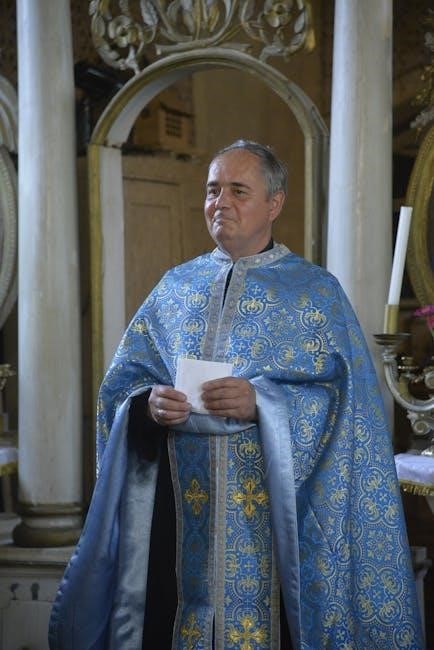
Musical Arrangements and Variations
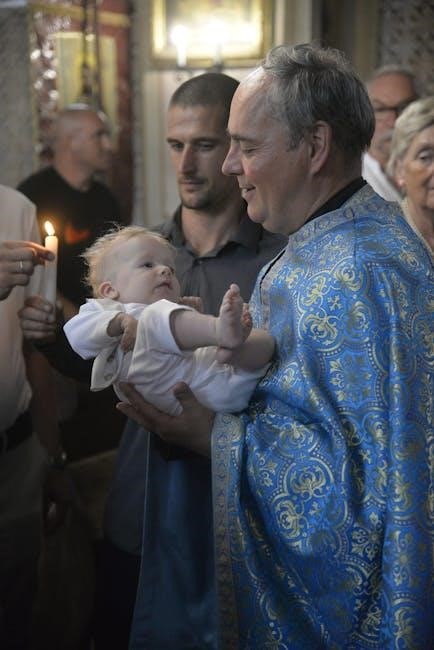
O Sacrament Most Holy’s PDF sheet music supports diverse arrangements, from traditional harmonies to contemporary adaptations for choir, organ, and instrumental accompaniment.
These variations enhance the hymn’s devotional impact, offering musicians creative avenues to express its sacred message within liturgical settings.
Traditional Harmonic Structure
O Sacrament Most Holy typically employs a straightforward, diatonic harmonic structure rooted in traditional hymnody. The readily available PDF sheet music often reflects this simplicity, making it accessible to musicians of varying skill levels.
Commonly, the hymn is harmonized in four parts – soprano, alto, tenor, and bass – utilizing primarily consonant intervals and predictable chord progressions. The harmonic language generally remains within a major key, fostering a sense of reverence and peaceful adoration;
The PDF versions frequently showcase a harmonic rhythm that aligns with the natural phrasing of the melody, enhancing its lyrical quality. While variations exist, the core harmonic foundation remains consistent across most arrangements found in these downloadable resources. This consistency aids congregational singing and preserves the hymn’s historical character.
The use of dominant-tonic relationships is prevalent, providing a clear sense of resolution and reinforcing the hymn’s devotional intent. The harmonic simplicity allows the focus to remain on the text and the sacred mystery it proclaims.
Contemporary Arrangements
While traditional PDF versions of O Sacrament Most Holy remain popular, contemporary arrangements are emerging, offering fresh interpretations of this beloved hymn. These modern adaptations often incorporate richer harmonic textures and more complex rhythmic patterns.
Some arrangements found online, alongside the standard PDF sheet music, feature altered chord voicings, adding depth and emotional resonance. Others explore different instrumental combinations, moving beyond the typical organ accompaniment.
Contemporary composers are experimenting with incorporating elements of contemporary Christian music, while still respecting the hymn’s core theological message. These arrangements aim to appeal to a wider audience and foster renewed engagement with the hymn’s enduring themes.
PDF downloads may include arrangements suitable for praise bands, incorporating guitar, bass, and drums alongside traditional instruments. These adaptations strive to bridge the gap between traditional hymnody and modern worship styles, ensuring the hymn’s continued relevance.
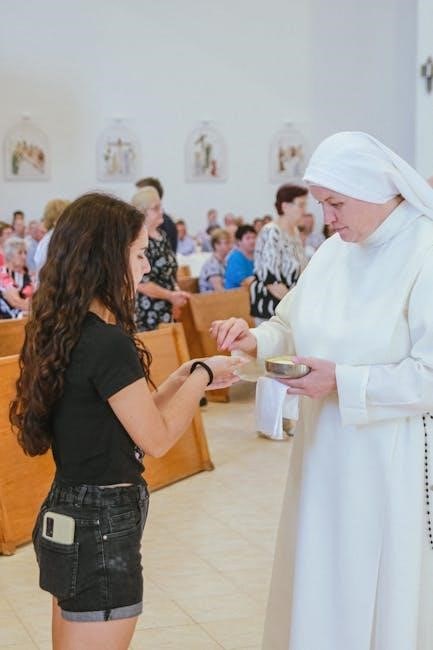
Adaptations for Choir and Organ
Many PDF resources for O Sacrament Most Holy specifically cater to choral and organ arrangements, reflecting the hymn’s strong liturgical roots. These versions often feature four-part harmony (SATB) designed to showcase the choir’s vocal capabilities.
Organ accompaniments range from simple, traditional settings to more elaborate arrangements incorporating pedal work and registration changes. PDF sheet music frequently includes both the vocal score and the organ part, facilitating rehearsal and performance.
Some arrangements expand upon the original hymn structure, adding introductions, interludes, and postludes specifically for the organ. These embellishments enhance the hymn’s solemnity and create a more immersive worship experience.
Choir directors can find PDF downloads offering varying levels of difficulty, from beginner-friendly arrangements to challenging pieces for advanced ensembles. These adaptations ensure the hymn remains a staple of Catholic and Anglican choral traditions.
Instrumental Accompaniment Options
Beyond traditional organ accompaniment, numerous PDF resources offer arrangements of O Sacrament Most Holy for diverse instruments. Guitar, piano, and flute sheet music are readily available for personal devotion or smaller ensemble settings.
These instrumental PDFs often simplify the harmonic structure while retaining the hymn’s melodic beauty, making them accessible to musicians of varying skill levels. Some arrangements include chord symbols for easy accompaniment.
More complex arrangements may feature instrumental descants or countermelodies, adding depth and texture to the hymn. These are particularly suited for concerts or special liturgical celebrations.
Online sheet music platforms provide a vast library of PDF transcriptions, catering to instruments like violin, cello, and even brass ensembles. This versatility allows for creative interpretations and broadens the hymn’s appeal.
Liturgical Use and Context
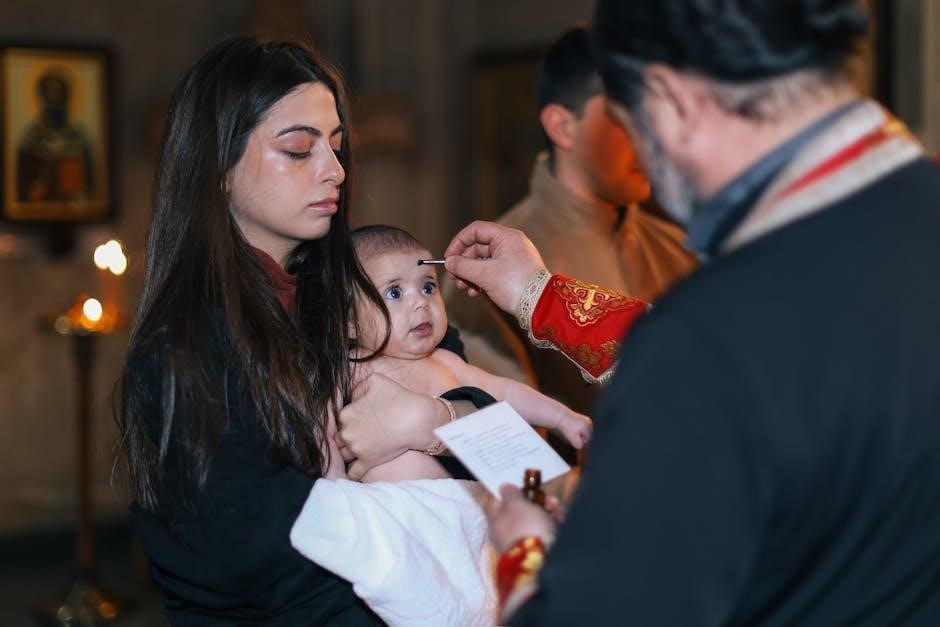
O Sacrament Most Holy’s PDF accessibility enhances its use during Eucharistic Adoration, Mass, and personal devotion, enriching liturgical experiences for all.
Appropriate Times for Singing the Hymn
O Sacrament Most Holy, easily accessed via free PDF downloads, finds its most fitting place within the sacred context of Eucharistic celebrations.
Specifically, it beautifully complements moments of consecration during Mass, amplifying the reverence and adoration for the Real Presence of Christ.
The hymn’s profound lyrics and melody also make it exceptionally suitable for periods of Eucharistic Adoration, fostering a deeper connection with the Blessed Sacrament.
Furthermore, its use during First Communion celebrations can powerfully convey the significance of receiving Christ’s Body and Blood for the first time.
Outside of formal liturgical settings, the readily available PDF allows for devotional singing during personal prayer times, strengthening individual faith and devotion.
Its accessibility ensures this timeless hymn can grace moments of quiet reflection and heartfelt worship, enriching spiritual lives.
Integration into the Mass
Utilizing the conveniently available O Sacrament Most Holy PDF, parishes can seamlessly integrate this hymn into the fabric of the Mass, enhancing the worship experience.
A particularly impactful placement is immediately following the consecration, allowing the hymn’s lyrics to serve as a heartfelt response to the transubstantiation.
The hymn’s themes of adoration and thanksgiving align perfectly with the central focus of the Eucharistic Prayer, deepening congregational participation.
Alternatively, it can be sung as a communion hymn, inviting the faithful to receive Christ with reverence and devotion, guided by the accessible sheet music.
Careful consideration should be given to the musical arrangement, ensuring it complements the overall liturgical style and enhances the solemnity of the moment.
The PDF format simplifies preparation, allowing music ministers to easily distribute copies and lead the congregation in unified praise.
Use in Eucharistic Adoration
The readily accessible O Sacrament Most Holy PDF proves invaluable during Eucharistic Adoration, fostering a deeply personal encounter with the Blessed Sacrament.
Its lyrical content, centered on adoration and reverence, perfectly mirrors the spirit of prolonged prayer before the exposed Eucharist, readily available for all.
Individuals or groups can utilize the PDF’s sheet music to lead communal singing, creating a beautiful atmosphere of contemplative worship and shared devotion.
The hymn’s verses offer a scriptural reflection on the Real Presence, prompting deeper meditation on the mystery of faith and Christ’s sacrifice;
Its simple, yet profound, melody lends itself well to quiet, personal singing, enhancing the intimacy of the adoration experience.
Having the PDF readily available eliminates logistical hurdles, allowing focus to remain solely on prayer and adoration of our Lord.
Cultural Variations in Liturgical Practice
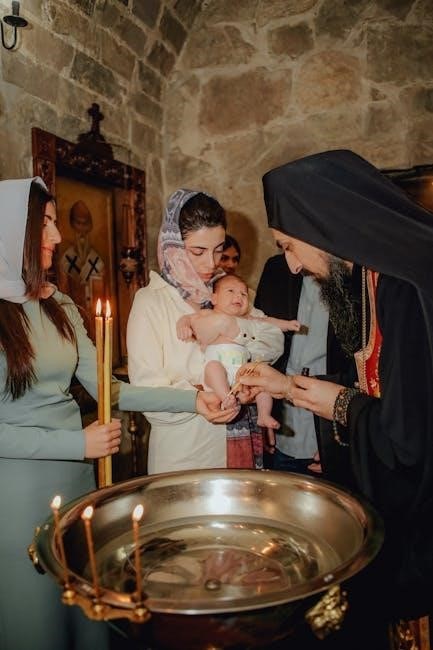
While O Sacrament Most Holy enjoys widespread use, its implementation varies across cultures, often reflected in how the PDF is utilized.
Some communities prioritize unison singing, relying on the PDF’s sheet music for congregational participation, fostering a sense of collective worship.
Others may incorporate instrumental arrangements – easily printed from the PDF – reflecting local musical traditions and enriching the liturgical experience.
In certain regions, the hymn is sung in the vernacular language, though the original English PDF serves as a foundational resource for translation.
The PDF’s accessibility allows for adaptation to diverse choir sizes and skill levels, ensuring inclusivity in musical offerings;
Despite these variations, the core message of Eucharistic adoration remains consistent, uniting believers across cultural boundaries through this beloved hymn.
The Hymn’s Enduring Popularity
O Sacrament Most Holy’s lasting appeal is bolstered by the convenient availability of the hymn as a readily accessible free PDF.
This digital format ensures continued use, fostering devotion and communal singing across generations and diverse worship settings.
Reasons for its Continued Use
O Sacrament Most Holy maintains its prominent place in Catholic worship due to its profound theological depth and beautiful poetic expression of Eucharistic adoration.
The hymn’s enduring popularity is significantly enhanced by the ease of access provided through readily available free PDF versions online.
This digital accessibility allows parishes, choirs, and individuals to easily obtain sheet music for worship services and personal devotion, fostering wider participation.
The PDF format facilitates printing and sharing, ensuring the hymn remains a staple in liturgical practice and private prayer.
Furthermore, the hymn’s simple yet powerful message of faith and reverence resonates deeply with believers, contributing to its continued relevance in modern times.
Its timeless themes and melodic beauty ensure its place as a cherished expression of Catholic spirituality.
Influence on Other Hymns
While a direct lineage is difficult to trace definitively, O Sacrament Most Holy’s profound Eucharistic focus has undoubtedly influenced subsequent hymnody within the Catholic tradition.
Its emphasis on adoration, sacrifice, and the real presence of Christ in the Eucharist has served as a thematic cornerstone for many later compositions.
The widespread availability of the hymn in free PDF format has also contributed to its influence, exposing generations of composers and lyricists to its structure and message.
Many hymns focusing on the Blessed Sacrament echo the hymn’s reverent tone and lyrical simplicity, demonstrating a clear stylistic connection.
The hymn’s enduring popularity ensures its continued impact on contemporary hymn writers, inspiring new expressions of faith and devotion.
Its legacy extends beyond direct imitation, shaping the broader landscape of Eucharistic hymnody.

Modern Relevance of the Message
In a rapidly changing world, the core message of O Sacrament Most Holy retains remarkable relevance, offering solace and spiritual nourishment to contemporary believers.
The hymn’s call to find peace and strength in the Eucharist resonates deeply with individuals facing modern anxieties and challenges.
The accessibility of the hymn as a free PDF download further amplifies its message, allowing wider participation in Eucharistic devotion.
Its themes of sacrifice, redemption, and divine love transcend temporal boundaries, speaking to universal human needs.
The hymn’s emphasis on communal worship fosters a sense of unity and belonging, counteracting feelings of isolation.
In an age of increasing secularism, it serves as a powerful reminder of the enduring power of faith and the sacredness of the Eucharist.
Community Singing and Shared Devotion

O Sacrament Most Holy profoundly fosters community singing and shared devotion, strengthening bonds among worshippers through unified praise.
The hymn’s memorable melody and accessible lyrics encourage congregational participation, creating a powerful collective experience.
The widespread availability of the hymn as a free PDF download facilitates preparation and ensures all can join in heartfelt worship.
Singing this hymn together transcends individual experiences, uniting believers in a shared act of adoration and reverence.
It cultivates a sense of belonging and mutual support, reinforcing the communal nature of faith.
The act of collectively lifting voices in praise deepens spiritual connection and fosters a more profound understanding of the Eucharist’s significance.